If you’ve just been locked up without warning, and you’re chemically dependent on a substance, you’ve just become part of a distinguished club called “The World’s Most Miserable”. Your first week will go one of two ways, depending on a variety of factors. In a best-case scenario, when you’ll tell the nurse you’re withdrawing, she may put you in your own cell in the medical segregation unit. Show them you can walk on water, and you may even get prescribed acetaminophen. At least you’ll be able to roll around in agony on your own bunk, relatively free and clear of all the noise and commotion in general population. Otherwise, you’ll have to make do with your bunk and many trips to the latrine and water fountain.
The bottom line is that you’re going to have to face withdrawals on your own, with very little resources to help. If you’re coming off heroin, meth, or alcohol, may the Lord have mercy on you and enable you to endure the pain ahead. You’ll eventually get there, depending on how long the receptors in your brain realize they need to start producing the chemicals you need naturally, and that you need to “grow” many more receptors now that there’s no drug out there doing the work for you.

The brain is an amazing organ, and we really don’t understand most of it. But after you have survived a horrible experience like that and made it through, you’d like to think you’ll never want to take a hit of whatever it was you were addicted to, so you don’t have to face those withdrawals ever again. But your brain can play tricks on you. It’ll make you think of how good the drug felt. How it enabled you to cope with life. And how much you need it, especially now that you’re incarcerated.
And when the time comes that you find out the drug is available – or some other drug that may not be the same but could come remotely close – you’re going to have to battle the temptation to stay away from it.
It’s bad enough to start using out in the real world. But in prison, that kind of dependency can seriously endanger your health, and possibly your very life. Most convicts, within the first few weeks of being behind the wall, will hear other convicts tell them to never owe anyone anything in prison. You’ll find “banks” in prison that will “loan” you money, but the interest rates are brutal, and if you don’t make your payment on schedule, the “collections department” won’t send you someone with a pleasant personality to remind you. No, instead you’re very likely to get Disturbed. Yes, that’s his name – Disturbed. He’s over six feet tall, with tattoos all over his body and forked earlobes. When he comes calling, you’d better answer the door with the money you owe whoever he works for. Because once you’re put on the shot-caller’s schedule, there’s no coming back the same.
I’ve seen it. A guy out in the yard suddenly surrounded by inmates. Fifteen, out-of-shape guards running up to see what’s happening, only to discover a man stabbed thirty times and the perp nowhere to be found. Now you have a guy bleeding everywhere placed in a wheelchair, handcuffed, and escorted over to health care. And he’ll be there a while. These are the kinds of days you could end up having if you can’t pay your bills in prison. And drugs are very costly.
In prison, you can get pretty much anything that’s on the street. Only it’ll cost you significantly more than that 35 cent-an-hour laundry job will allow. And once you’re part of the user community, you’re placing yourself on the radars of many gangs you’d rather know nothing about.
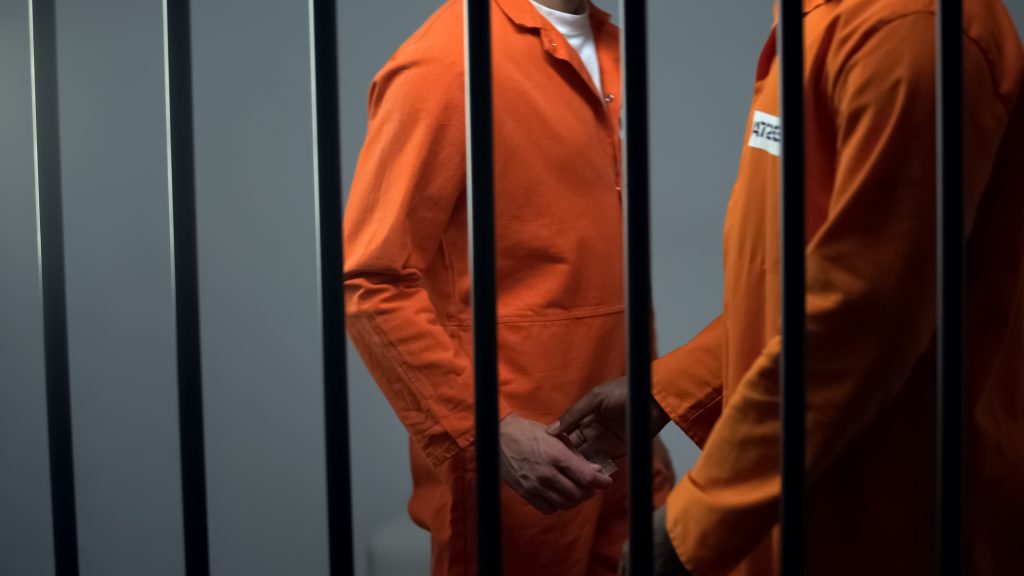
The drugs almost always come in from the guards. Sure, once and a while a visitor will get something past a body search, or a drone may drop something in the yard. But they usually come in from someone who works at the facility and has regular contact with the inmates. It’s risky, but the profit margin is through the roof. Suppose you’re a guard with a spouse that has a prescription to Suboxone for thirty strips a month. An inmate can get ten pieces and charge $10 per piece. That means you have a box worth $3000 you probably bought for less than $20. Not a bad way to make some extra cash! And you can do the same with all kinds of other substances, many of which you can get down at your local smoke shop on the way to work. Humans are ingenious, and where there’s a will, there’s a way.
In many states, inmates even get drugs in by having a liquid form of a substance soaked into paper. Type up some fictitious document from one of your “lawyer” buddies on an official-looking letterhead. Normally, the prison staff gives you photocopies of the mail sent to you, and they toss the originals. But for legal mail, they are required by law to give you the original copies. You can take that legal letter, cut it up into strips, and have something your buyers can use. That said, most states are on to the problem and have now started copying legal mail as well. But it just goes to show that no loophole will go unexplored and attempted when it comes to getting substances into the prisons.
I knew a guy who bunked across the hall from me who had a beautiful wife and daughter. He was in his twenties. Had so much to live for, and only two years left until parole. One evening, he fell down unconscious in the bathroom and started convulsing. It took the nurses almost an hour to revive him. To their credit, they refused to give up, and it was purely by the grace of God that he survived.
He got moved to another unit, where a few months later the guard heard him screaming out in the middle of the night that he was being attacked by grasshoppers. He was back using again, hallucinating due to the heavy doses he was ingesting. I don’t know if he made it out of prison alive. That’s how powerful drug addictions are.
When an inmate gets addicted to a drug, he gets desperate to fund it. That’s where extortion of and theft from other inmates can be a problem. Some inmates “lock up”, which means they go to the guards and tell them he’s in trouble because he owes money and can’t pay. The guards usually put him in segregation and eventually transfer him to another facility. The trouble is, his problems often follow him, for when he gets to another place, word gets around that he owes a particular person, who belongs to an organization, and that organization is found across the board in most of the prisons. The bottom line is that his problems follow him wherever he goes.
His best-case scenario is to pay off what he owes and to go through withdrawals. I’ve seen that happen as well. An inmate who is normally very active and sociable will suddenly withdraw into his cell and sleep most of the day. Those close to him will confide he’s in withdrawal. And so, he suffers, without letting anyone know his predicament. He might get some help from the health care system. The problem is, if he admits to using drugs in prison, it can go on his record. He doesn’t want the Parole Board to know he’s a drug user, so he’s most likely simply to hide the problem.
The bottom line is that drug addiction in prison brings on a new layer of problems than it does in the world. Convicts who are new to prison and think they can just dabble with drugs need to be warned up-front that doing so is an extremely dangerous prospect, to be avoided at all costs. Fortunately, those dangers are significant enough to mitigate many from using drugs, but it doesn’t persuade everyone.
One of the goals of Iron Regimen Ministries is to share the information we’ve learned about drug addiction in prison with those we’re able to communicate with. Even Christians are susceptible to drug addiction. Think about addictions out in the world to simple things like coffee, chocolate, energy drinks, caffeine, and nicotine. Even Christians, who should know better, get hooked on such things. Add the stresses of life into the mix, and other chemicals get added in that are not legal to obtain.
Christians need to be warned just as strongly, and Christian leaders surely will encounter believers who struggle with addictions in prison, not only to drugs, but to pornography, gambling, and other vices. Again, those of us at Iron Regimen Ministries have the desire and ability to counsel and warn believers about these dangers to help them deal with them during their time being incarcerated. With the help of the Holy Spirit, these men can be equipped with power to say “no” to these things that would cause harm to themselves and the testimony of Christ.
Leave a Reply